Category: Writers and Readers

CHAPTER TWO

THE DUCK POND


Pina walks to town as she has the last three days. It’s just a short stroll past the gorgeous stone building of Vella Cheese Company (still open), maker of a fabled dry Monterey Jack, past a horse farm where she counts them—six Clydesdales out grazing today. The rain has greened up the big yard. The horses strike her as marvelously mindless, but maybe they’re more locked into their place in time than she can imagine. She stops to watch them, the way their bodies shimmy with the current of life. She loves the feathery hair above their hooves. These massive creatures no longer do the hard work in the fields that they were bred for. Their only use is ceremonial now, pulling wagons for parades, and such. She pauses, briefly, to think about a world in which humans became irrelevant. The horses bunch together even as they graze, have little interest in separation, unlike the woman with the umbrella trundling in her direction, once Pina turns the corner. This woman, taking wide deliberate steps, looks like she’d weaponize her parasol to keep folks at their distance. Fortunately she crosses the street thirty yards ahead.
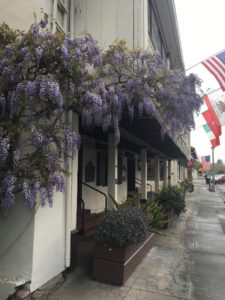
The flags of the Swiss Hotel

There are no more tourists in town, just a few cars, and fewer people. Past the old adobe Barracks and the defunct Cheese Factory, Mary’s, the homey pizza joint, has brought its outdoor tables in and offers takeout meals, between twelve and five. It’s noon and looks completely dead. Next door, The Swiss Hotel, Vince’s favorite place in town, is fully shuttered. Two days ago they still offered limited take-out. Vince feels like he’s won the lottery when he’s able to snag a table on the wide outdoor patio. There’s a choice view of the park and parade of tourists. Plenty of women for Vince to appreciate. Nobody today. She can almost hear Vince’s lament: When will they next serve a bowl of clams and mussels with sausage? Ah, just the basket of sourdough with the peppered olive oil.

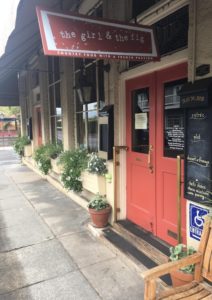
Next corner, The Girl and the Fig, her favorite. Vince says it’s too hoity for its toity, but damn if it doesn’t have the most exquisite bar for eating. A Hendricks martini and a mushroom tartine to start. Yum. She loves the duck confit but is just as happy with a rare hamburger with grilled onions and frites. Sixteen bucks. Is that hoity toity? One winter night they shared the cassoulet at the bar. Vince relented, called the French beans soul food and asked her to make it. “Forget about it,” she said, “that would take days of cooking, and you have The Fig,” which now has a sober note of closure on the door addressed to the Fig Family. She’s never considered herself a member, but why not?
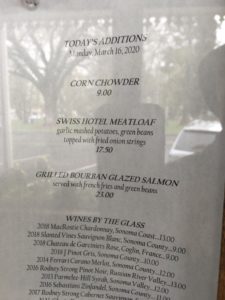
 

Last day of service
The Fig with a blank Plat du Jour board

It’s the same with such closure notes all the way down the west side of the square, from Eldorado Hotel to the Sunflower Café, the Global Free Trade market, the great kitchen store, the boutiques and wine tasting rooms, the art gallery, the spa. She passes Steiners, the hard-drinking bar that’s been in place since 1927, and stops at the windows of the ancient menswear shop, Earlad’s, since 1922, which used to be the last place in town, as Vince told her, where a fella could get a cowboy shirt. There’s not one to be seen through the windows. No string ties either. Catering to the tourists, Earland’s offers lots of Hawaiian shirts.

Instead of turning to the south side of the square, she crosses to the duck pond. The time Vince brought her there, he said, “This is where you can witness rape in plain sight everyday.”
“What are you talking about?”
“Just wait.”
“What if I don’t want to wait?”
“Just watch the ducks.”
“What is this, Vince, going to a lynching?” She did in fact watch the ducks. It was late in the afternoon. There were seven or eight of them swimming around. It was calendar pastoral. She and Vince were on a bench ten feet from the pond. Vince started whistling, one of his damn jazz riffs that he can’t leave alone, and in a minute, maybe two, a mallard swooped down on a hen, clamped onto the poor duck’s throat, and started humping her. Did she just see what she saw? Fucking Vince. She pushed him; she wished she were able to push him off the bench. “Did you just incite that with your fucking whistling?”
“Come on, Pina. I’m not that powerful. It’s just nature playing out in front of us.”
“Is that why you come here?” she asked. “To incite that shit?”

Now, across the pond from the bench where she sat with Vince, she recognizes a man, with legs crossed, eating a sandwich. It takes a moment for her to place him. It’s Charlie, an acquaintance of Vince’s who lives in the complex. They’d had a glass of wine with Charlie at his condo, which, as she remembers, was filled with engaging art and red enamel furniture that looked like it came from China. They had a pleasant visit, sitting on Charlie’s deck where he had beautiful planters of roses and all sorts of citrus. Later, Vince waxed on about Charlie. It was a good story, which is why she remembers it. The guy grew a long droopy mustache and changed his name to Raoul when he moved up from L.A. Eventually he worked as a lead animator at Industrial Light & Magic, and retired with a big sailboat moored in Sausalito, not long after turning fifty. Once he retired he took his old name back and shaved his mustache.
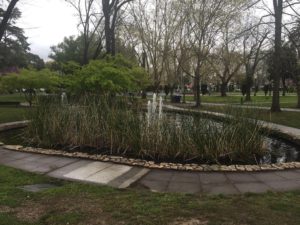
The Duck Pond without ducks.

Pina strolls around the pond and ten feet away, says, “Charlie?”
He looks up, blinking at the sun. “Yes, yes.” He doesn’t recognize her.
“Pina,” she says and is about to explain.
“Oh, yes, Vince’s wife. Nice to see you. Really nice to see you. Vince up here now?”
“No, I’m isolating from him here.”
“Oh, right, right. The poor man’s in the trenches. I worry about the doctors.”
She nods. Charlie is holding his half eaten sandwich in his hand. It looks like tuna. “I’m sorry to interrupt your lunch.”
“No, no. Sit. I think we’ll have a good six feet between us.”
It looks closer to five feet, but she sits. Living dangerously.
“Pina—that’s a beautiful name. Rare but beautiful.”
“It’s short for Crispina, which means curly-headed in Italian.” She doesn’t know why she’s volunteered this.

He gazes at her head and smiles. Yes, her hair is still wavy. She likes it, even the small wedges of gray that keep asserting themselves. White women who straighten their hair amuse her.

Charlie has slipped what’s left of his sandwich into his paper bag. In a knick of time, she stops herself from reaching to touch his arm, to tell him that he should keep eating. What’s the matter with her? In the middle of a plague she’s sitting on a bench with a strange man she’s about to touch.
“So you’re Italian?” he says.
“Yes, my parents came from Bergamo.”
“Ah, Bergamo. Beautiful city. I spent a few days there on the way to Lake Como.”
She looks into Charlie’s face, which is well tanned and, strangely, without lines across his high forehead. How can a man in his fifties be unmarked by age? She tries to imagine him with a droopy mustache and almost starts laughing.
“Matter of fact,” he says, “I’ve been thinking a lot about Bergamo. You know it’s become one of the epicenters of the virus?”
“Yes, I heard.”
“And your parents?”
“They’ve passed.”
“So sorry. Anyway, they’ve been dropping like flies in Bergamo. The mortality rate is brutal. They don’t even get a chance to bury their dead.”
Charlie has become emotional. He pulls a handkerchief from his pocket and pats his eyes. “I’m sorry,” he says, “sometimes it just gets the better of me.”
“I understand.”
“But Bergamo. Ah.” The laughing blue comes back into his eyes. “I take it you’ve been there.”
“Yes.” She thinks to tell him about her trips as a child, but stays silent.
“I was there at chestnut time,” he says, “and in the morning you’d see the old men going out with their sticks and their sacks to gather chestnuts, and, oh my, the bakery windows were stacked high with grand, marvelously colored macaroons. Cypress Umber. Red ochre. Vermillion. I mean colors a Renaissance painter would be proud to have in his palette.”

Charlie’s eyes are lit up with the colors he names.

“I’ve got to tell you, I had a very memorable meal in Bergamo. Little birds. They call them uccillini. Three of them came on the plate in a cognac sauce with polenta. They’re songbirds, really. You put the whole bird in your mouth at once. Crunch the tiny bones, the brain. Two three bites of flesh. Delicious. The only thing I didn’t eat was the feet. You’d think after eating three songbirds I’d be able to carry a tune.” He laughs at his little joke.
“Hmm,” she says, not knowing what else to say.
And then a blush of worry crosses Charlie’s face. His eyelids flicker and close. “I’m sorry.”
“For what?”
“I’m just sitting hear talking your ears off. Too much time alone, I guess. Forgive me.” He stands, grabs his paper sack.

Did she do something to offend him?

“Good to see you, Pina. Send my best to Vincent. Tell him I’m proud of him.”

What did she do? It all happened so fast. She watches him walk off. And then he surprises her again. “Pina,” he calls from a short distance. “I’m a creature of habit. That’s what this thing’s done to me. Anyway, I have my lunch here everyday at noon.”

She watches the ducks for a while, keeping a keen eye on the mallards. For now, they all circle seamlessly, their worlds, despite the paucity of visitors, far less changed than hers.
CHAPTER ONE

THE FROGS


At first she doesn’t know what to do with herself. She has five loads from the car. A ridiculous excess. Pasta and dairy. Tuna, sardines, anchovies. A whole massive chicken, salmon fillets, two packs of smoked mackerel, Imagine portabella broth, a squat edifice of Trader Joe’s pizzas: woodfired heirloom tomato and arugula. First time in her life she’s been a hoarder. Her liquid provisions: ten bottles of Whole Foods Italian water, a six-pack of Chateauneuf du Pape from Vince’s cellar. Sauvignon Blanc, Tavel Rosé, Hendricks and Stoli for the freezer. Sake. Campari. Cinzano. Glenfiddich, and Courvoisier. She decided against rum—it goes down too easily. If the virus doesn’t get her she’ll drown herself in booze à la Nicholas Cage.

Clearly, she’s going to run out of toilet paper in two weeks unless she changes her habits. That’s what this is about. Retooling the middle-aged brain. Stop touching your face. Wash your hands for long enough to sing Happy Birthday twice. Beam disinfectant vibes wherever you tread. Be mindful.

Fava beans in The Patch

As she puts away the groceries she catches herself picking her nose. There’s no hope for her. Her thoughts come in fragments, bullet points in search of focus. She tries to get herself to sit down a minute, but she’s too wired for that and keeps circling the living room, pausing from time to time in front of Vince’s picture window. That’s what he calls it even though it’s an inelegant sliding glass from the seventies, framed in steel, which nobody can keep clean.

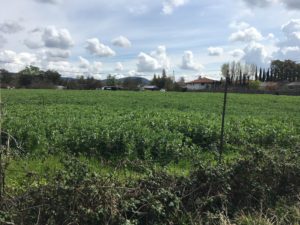
Across the street is a small farm, dense with fava beans that will soon be plowed under to nourish the earth. Every year she’s impressed that this farm, The Patch, refrains from early spring planting. Land stewardship. The phrase pops into her head from who knows where. It’s never been part of her vocabulary.

She heads out to the deck to light a joint and a flash rainstorm with tings of light hail delights her. At the edge of the overhang she gets a little wet. Five hits of Golden Uni and she’s seeing things more clearly. She has options. She pours herself a sake on ice.


This is Vince’s condo with his things and his esthetic: a determinedly male sense of comfort with a wide Italian leather sofa and a pair of Prairie School black leather Morris chairs, not to mention a high-end La-Z-Boy in the second bedroom in front of the TV. Dominating the master bedroom are three charcoal sketches of female nudes by the North Beach artist Homer Sconce, who sold them, Vince claims, for a song.

Although she’s come up with him weekends for seven years, she’s never come alone. Now she’s to stay for the duration. A few years ago three girlfriends from college joined her here for a getaway weekend in June. They hired a limo and went to a few wineries. Molly, the financial advisor with Ameritrade, vomited, mostly out the window, and the others cheered as if it were a midlife triumph. They had more wine with dinner. Olga, the yoga teacher with a bothersome lisp, brought outsized T-bone steaks. She’d thought Olga had become a vegan.

They grilled on the deck. When she saw the slabs of meat on the platter, charred crisp at the fat edges and swimming in blood, she wondered why they were masquerading as men, and as if to amplify this curiosity, Janice, the dentist from Alameda, brought her computer to the table, before they’d even cleared the dinner dishes, and went directly to Porn Hub.

They gathered around the screen amid the detritus of plates heaped with gristle and bone and puddles of blood, and gawked at random cocks. The men attached to them either looked like pea-brained adolescents or heavily-inked carnies who’d just as soon slit your throat as fuck you.

She broke away from the others and stood with a glass of Zinfandel at the picture window. Despite it being dark she knew she was gazing in the direction of rows and rows of Early Girl tomatoes.

At the dining room table, Janice hooted, “I’d take an itty bit of him,” and Molly, who’d fully recovered and was far along on round two, shouted, “You don’t get an itty bit. You get all of him.” It wasn’t the weekend she hoped for.


Man novels and poetry.

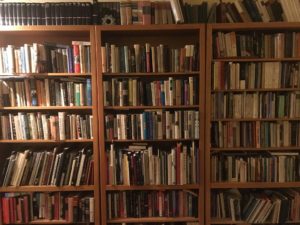
Vince bought the condo after his first wife died and he lived here awhile with his second. He has his library here—a lot of man novels and poetry. He keeps his nonfiction at the house in the city. The poetry was one of the first things that endeared her to him. He’d written it in college but the writing fell away during med school. “Poetry takes time,” he’d said, “and I didn’t have it.” In any case, he’s bought plenty of poetry books over the years and is proud of his collection.

Some nights Vince picks a book off the shelf and reads a poem to her. He’s quite a performer. She wonders if that comes to every man who knows that he’s handsome. His elevated elocution isn’t particularly pretentious. It’s clear he loves the language. The rounded vowels resound with a warm, woody, clarinet timbre.

Her father recited her poems when she was young. Longfellow and Wordsworth, poems he’d learned in school. He loved Whitman’s “O Captain, My Captain.” The poems weren’t delivered as fluidly as Vince’s but he was her father and he was sweet to her. She loved the way his brow furrowed when he tried to remember lines.

She’s never mentioned her father’s affinity with poetry to Vince. In this and in other matters she’s done her best to keep the two men apart, as if standing with arms outstretched, one on each side of her. She’s not been as mindful of this separation with other men, but then Vince is nearly twenty years her senior. It’s her father, who died when she was thirteen, who’s in need of protection. His spirit must endure no matter what becomes of Vince.

A few weeks after they met, he read a poem to her the first time. It was “The Song of Wandering Aengus,” by W. B. Yeats. Later she memorized the poem and began to use the first stanza in her work with a few clients, because it was so lucid and the words fell directly into their natural pockets.

     I went out to the hazel wood,
     Because a fire was in my head,
     And cut and peeled a hazel wand,
     And hooked a berry to a thread;
     And when white moths were on the wing,
     And moth-like stars were flickering out,
     I dropped the berry in a stream
     And caught a little silver trout.

That first time, after he’d finished reading the poem, she swallowed some air in the spell of the poem’s simple majesty. She was slayed by its pictorial clarity, not to mention the loveliness of the man reading it. But then he broke his spell, “You know,” he said,  “it’s quite daunting to read poetry to a speech pathologist. I imagine you listening to every word with your speech pathologist ears.”

That struck her as an odd thing to say, perhaps because that wasn’t at all the way she’d listened to the poem. “It shouldn’t be daunting,” she said, “to read poetry to the woman you love.”

Their eyes met. She’d clearly overstepped her bounds. Neither of them had yet spoken of love.


At the picture window she’s waiting for dusk. With it, she expects the frogs. It’s been raining. They’ll be out in force and will become her closest confidants.

The first time they came to Sonoma, Vince showed her his beautiful four-volume set of Haiku poems, edited with pithy explication by a divine Englishman, R. H. Blythe. She latched onto the volumes, perhaps as a way of latching on to Vince. And yet, apart from him, the bite-size poems continue to nourish her. She writes them down by the dozens in her daybooks. In Blythe’s volumes the haiku are not translated in the nifty 5-7-5 syllable count that she was taught as a child. When she asked Vince about that he said, “The syllable count is the thing Americans like most about them. They think they’re crossword puzzles or some damn thing.”

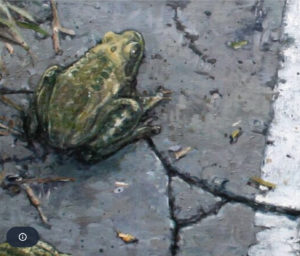
A frog. (c) Chester Arnold, 2020

Blythe is a sweet companion. He provides context for seeing the burnished images in relief, along with a hint of their spirituality. She brought the four volumes with her to the city and now back to Sonoma. Her favorite poet is Issa. He’s the earthiest. According to Blythe, Issa wrote nearly 300 haikus about frogs.

         Frogs squatting this way,
     Frogs squatting that way, but all
       Cousins or second cousins.


It was Vince’s idea that she isolate up here. Her history of asthma, he argued, put her in the high-risk category. His age marked him as high-risk as well, but he’d stay on the front lines at Kaiser and probably get the virus and probably die. She’s never been especially fatalistic, but now it’s clear that one of her pastimes during the plague will be noting each of her atypical attitudes and behaviors.

The first discussion of isolation was at the dinner table in the city. She’d roasted a leg of lamb in mustard sauce and steamed asparagus that she dashed with olive oil and Balsamic and flecked with red peppers. There’d be plenty of leftover lamb for him to take sandwiches to work. Her office had just closed; she wouldn’t need sandwiches. Vince went at the lamb like it was his last meal and extolled the virtues of the bottle of Oregon Pinot Noir they were sharing. “It’s perfect with the lamb,” he said, “no need for a jammy California Pinot,” and then, very matter of fact, after taking a long sip of wine, he said, “I think you should isolate in Sonoma, Pina.”

“Why not just stay here?”
“You need to isolate from me, darling. I have to keep working.”
The idea shocked her. Her mind whizzed with questions. Was he just trying to get rid of her? Seeing somebody else again? Was this the beginning of the end?
She fixed her eyes on him. “So I’m going to just be left up there like The Woman in the Dunes?” She had no idea where that came from; she hadn’t seen the film in decades and all she remembered was a slight woman with a broom sweeping furiously at the encroaching sands.
“Pina,” he joked, “there are no dunes in Sonoma and very little sand.”
“That’s not what I’m fucking talking about,” she hollered.
He took her hands and nodded, and nodded some more, horse-like. Then, in his let’s-be-reasonable voice, he said, “I can’t have you getting sick. You mean too much to me, Pina.”

This evening, before the frogs start up, she hears the woman downstairs crying. Talking on the phone and crying. Pina’s never met her—a newcomer to the complex—she doesn’t even know her name, but she’s been impressed, the couple of times she seen her, with her fastidiously-coifed wedge of white hair. It matches up surprisingly well with her REI ware.

To cover the sound of the poor woman’s crying, she clicks on Vince’s Bose system, with his thousand imported songs, mostly jazz and a couple of Dylan albums, and keeps clicking forward till she lands on a Bill Evans album she can stand. She’s never met a man so jazz crazed. He accepted, he said, the fact that she didn’t hear jazz. She heard it fine; she just didn’t like it for the most part. It sounded automotive to her, all pistons and thrust, aching for a muffler. That impression may have been gained in part from one of the half dozen framed album covers Vince has on the walls of the living room. It comes from the one that she didn’t understand. She acknowledged the beauty of the others: Coltrane pensive on the cover of Blue Train, Monk honky-tonking at the piano in a funny hat, Dexter Gordon, illusory, shrouded in smoke from the same cigarette forever. But this one: a racing car, a Corvette in motion, titled “Hard Driving Jazz,” made no sense to her. It didn’t align with Vince’s style. A college friend had given him the album. “The dumb fuck,” Vince explained, “thought he’d picked up this cool album to play when he had girls over, but it turned out to be this hot out-there deal with Cecil Taylor on piano and Trane, who for contractual reasons, is listed as Blue Train. Yes, she’d been schooled on the album and, yes, jazz will always sound automotive to her.


Back to what to do with herself, Pina decides to check what’s on TV, and then remembers that last month Vince cancelled the cable service and cancelled the Internet in Sonoma, since they rarely use it. He railed for a half an hour against Comcast. “Why pay those bastards $150 a month?” She still has her phone for the Internet and there’s radio on the Bose system. Clearly she is better off than the Woman in the Dunes. After washing her hands for the tenth time today, despite being in contact with nobody but herself, she wonders exactly who’s birthday it is.


At the picture window, she takes half a gulp of cognac. Vince tells her, you should chew a good cognac. Who wants to chew it? She loves a splash of something strong and fine that brings a burn to the throat. She’s been good today. She wanted to drink the whole bottle of sake but she only did half. Hey, she made it through the first day.

Pina puts all the lights on. It’s dark outside. The frogs are in full serenade. She sees herself in the glass: sharp Italian nose, doubting eyes, high cheekbones, ruthless, or pretending. She parts her lips, which an ex once dubbed her generous lips. She’d like to paint them now with the rich dusty rose matte she brought with her, but instead she dips into the snifter and caramelizes her nostrils before properly drawing the brandy in, like a bird from a feeder. Now she holds it, her tongue is there, a fortified bubble of dark honey on the palate. She resolves to follow this with strong black coffee and another cognac.

The lit room is visible to the street. Not that she wants to be seen in her isolation. Of course, there’s nobody out there. She slips out of her sweater and then pauses at each button of her blouse. Some insane part of her wants to remember every button she’s ever buttoned or unbuttoned or had unbuttoned. She needs a new bra, but she’s out of it. The truth is, she’s always liked her breasts. Her college boyfriend Cole told her they were well turned and she insisted that only ankles and legs could be well turned. “That’s a lie,” he said, with a breast in each hand. But, always a realist, even at twenty, she pointed out that they’d soon droop and become unturned.

She slips off her skirt. Bright pink panties. Who’s she kidding? Actually, it’s surprising how well her body has kept its shape. She’s not going to turn from the sight of it. Feast your eyes, frogs! There are so many out there, so many little green hoboes, such a crowd. What do they know about separation?

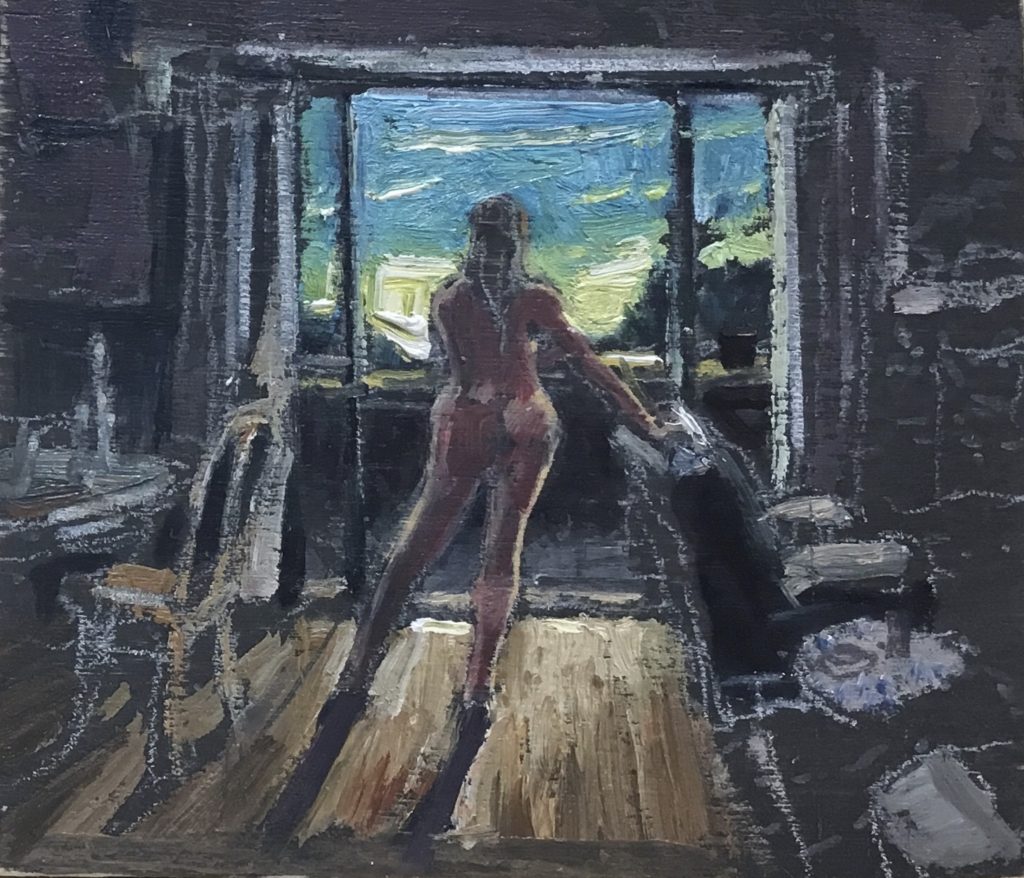
Pina at the Picture Window      (c) Chester Arnold, 2020

Kelly’s Cove Press to Launch New Arts Magazine The Cove


Berkeley publishing house Kelly’s Cove Press is pleased to announce a new semiannual literature and arts magazine, The Cove.

The Cove will showcase poetry, fiction, essays and visual arts by both up-and- coming and established artists and writers from across Northern California, with each issue focused around a specific, broad theme. The free, online magazine will be accessible to audiences worldwide at thecovemagazine.com beginning with the publication of its first issue, Fire, on April 20, 2018.

The massive wildfires that burned throughout Northern California in October 2017 affected, directly or indirectly, countless individuals across the region. The inaugural issue of The Cove features a range of responses to this event by a diverse group of artists and writers working in a variety of styles and mediums.

The Fire issue of The Cove will include among its contents:

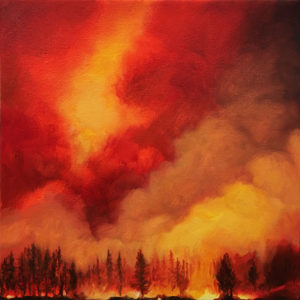
“Sixteen Bay Area Artists Paint Fire,” a collection of fire-inspired paintings by Tami Sloan Tsark, Stephanie Thwaites, Spence Snyder, Natasha Sharpe, Keith Wilson, Kristen Garneau, Linda MacDonald, Margot Koch, Michael Kerbow, Jude Pittman, James Brzezinski, Greg Martin, Deborah Seidman and Bill Russell;

“Poets on Fire,” a series of responses in poetry to the October wildfires by Susan Griffin, Lisa Summers, Katherine Hastings, and Gwynn O’Gara;

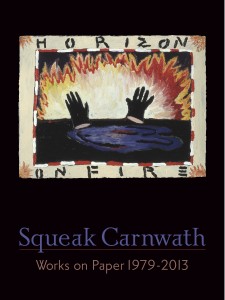
“Squeak Carnwath’s Fire Art,” a showcase of fire-themed paintings and prints by the celebrated Oakland-based visual artist;

“Where’s Willoughby,” a new short story by North Bay writer Daniel Coshnear;

New poems by San Francisco poet and essayist Genine Lentine;

Old poems by Monte Rio poet and novelist Pat Nolan;

And four very short stories by San Francisco writer Olga Zilberbourg.

In remembrance of Mike Tuggle: poet, teacher, friend. 1939-2017

Kelly’s Cove Press mourns the passing of Mike Tuggle on June 18, 2017. During KCP’s first season, 2011, we published his chapbook What Lures The Foxes. We will miss Mike as a poet, teacher, and friend. See below Terry Ehret’s sensitive piece on Mike from the Sonoma County Literary Update, and a poem by KCP publisher Bart Schneider about his friendship with Mike dating back nearly 50 years.

REMEMBERING MIKE TUGGLE

By Terry Ehret

It is with deep sadness that we note the passing of former Sonoma County Poet Laureate, Mike Tuggle. As a poet, a mentor, and a friend, he touched many of us in the literary community. He will be long remembered and deeply missed.

I first met Mike and his second wife, Susan Kennedy, when I began working with the California Poets in the Schools Program in 1991. Over the years, our paths crossed often at poetry readings and literary gatherings, especially during the years he served as Sonoma County Poet Laureate. Then in 2011, Mike’s book of poems What Lures the Foxes was selected for publication by Kelly’s Cove Press, coming out simultaneously with my book, giving us many more opportunities to read our poems together. Mike had a deep appreciation for music and rhythm, which he brilliantly harnessed in his poetry. He had a gentle wisdom, accentuated by his lovely Oklahoma/Texas drawl, and a calming presence I always appreciated.

Mike was born in Tulsa, Oklahoma in 1939, and grew up in West Texas. He lived in Sonoma County from 1981 until his death on June 18, 2017. He taught with the California Poets in the Schools Program from 1971-2003. His publications include Cazadero Poems, co-authored with Susan Kennedy, Absolute Elsewhere, The Singing Itself, What Lures the Foxes, and most recently The Motioning In.

Susan Kennedy wrote this about Mike’s passing:

His last day was a full one, like his Sagittarius nature loved. First to his open mic in Guerneville, then to the Cazadero Farmer’s Market and the General Store, checking in with the lovely ladies. Then a visit from his grandchildren with Grandma Margo before they went swimming at the creek below his cabin. Then watching a movie with Jai, a favorite activity. That was the last time anyone spoke to him. When he was late showing up for Father’s Day dinner at Lilah and Ishi’s, Ishi and the kids drove up and found him, lying on his couch with an incredibly peaceful, profound look on his face. When I asked Jai what movie they had watched he said “It was about an old man who waiting to die and then he did.” He was suffering greatly with all his infirmities and we are ultimately grateful that he has been released from them although we are all grieving very hard, facing the big hole he leaves in our lives.

About poetry, Mike said “A good poem hurts you a little,” and while that is certainly true of Mike’s poetry, there is also a warm, honest, and guileless vision that takes you by the arm and walks you through our common human experiences of loneliness, coupling, uncoupling, grief, and pure animal joy. At the end of this month’s post, I have included two poems from his most recent collection.

Courtesy of Sonoma County Literary Update

__________


Outlaws at the Photo Booth
For Mike Tuggle, 1939-2017

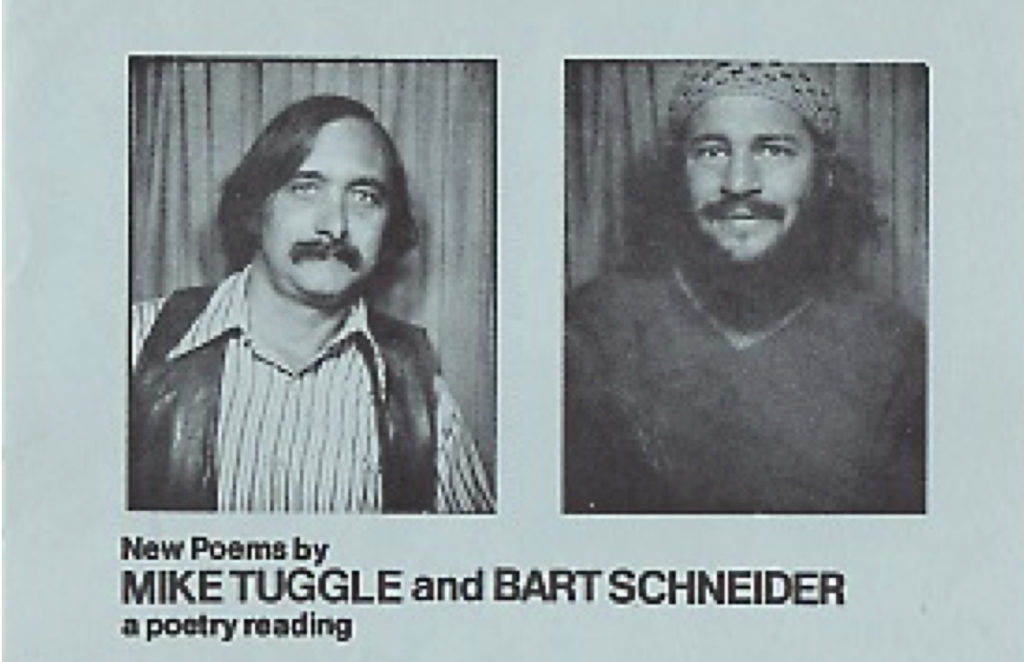
We scored a reading and needed photos.
Mike was thirty-two, I, twenty.
He’d been my mentor since high school.
Left hand at nine o’clock, right at three, he coached me, before I was ready to drive.

I came from a toney block but never had any dough; he drove cab and picked up spare meals,
stood me to Rainer Ales.
Short on authority, I borrowed some of his.

Beside being a curious and companionable slacker, I had little to offer.
I did turn him on the first time,
for which he credited me the next forty-eight years.

We ducked into a photo booth on Market Street
and froze like a pair of peasants dreaming of gangsters.
I’d always suspected I was a charlatan,
and the strip of snaps was indubitable proof.
Mike looked fiercer than the man I thought I knew,
who was kind and spoke a sexy poetry drawl.
And yet, his favorite topic was the void.
Look into it, he dared me. You might find out who you are. I fear my post-adolescent angst
was no match for his classical demons,
but he cheered my budding skill as a bullshitter.
Back out on Market Street, bright sun on grease stains,
girls in miniskirts sauntering by the dollar movie joints,
a wino nursing his pony of Thunderbird,
I awaited Mike’s response:
We’re clearly set, Brother Bart.
Soon as we commit a formidable crime
these outlaw photos will gild our glory.

Bart Schneider
21 June 2017

Just Published

Just published: Chester Arnold’s Evidence, a retrospective celebration of Bay Area artist’s long career. This wide-ranging collection surveys works from the past three decades, investigations rich with humor and penetrating visual commentary, along with a fierce love of the natural world and the art of painting.

2016 Holiday Sale


We invite you to take advantage of our annual holiday sale at Kelly’s Cove Press. All our titles are available at a discount of at least 20% through January 19. After that all bets are off! Buy three books or more and we pay domestic shipping. Our books make charming gifts.